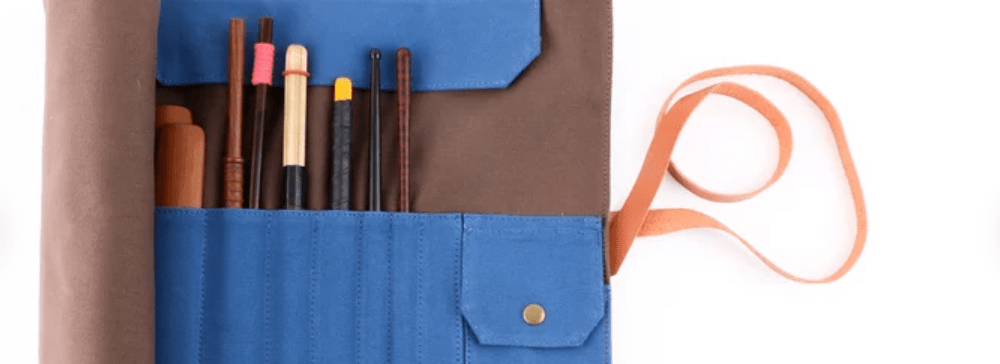
There are four main groups of tippers to be aware of. Solid tippers, Clickers, Hot Rods and Brushes. Within each group there are many different types to try and experiment with. Each type is very distinct and is good for a certain ‘sound’, place or time.
I’ll briefly cover off the four groups and then share a few tips and talk a little about the pitfalls of each.
Solid Tippers

These are as the name might suggest – solid wood tippers. In this case I’m classing top end and double ended tippers in the same group (i.e. ones you hold at the top and those you hold from the middle).
Traditional tippers, especially the heavier and bulbous ended ones all come under this group. As well as the thinner and lighter double or single ended ones.
Essentially, anything which is solid wood comes under this group but they do vary a great deal in quality and shape.
Hot Rods
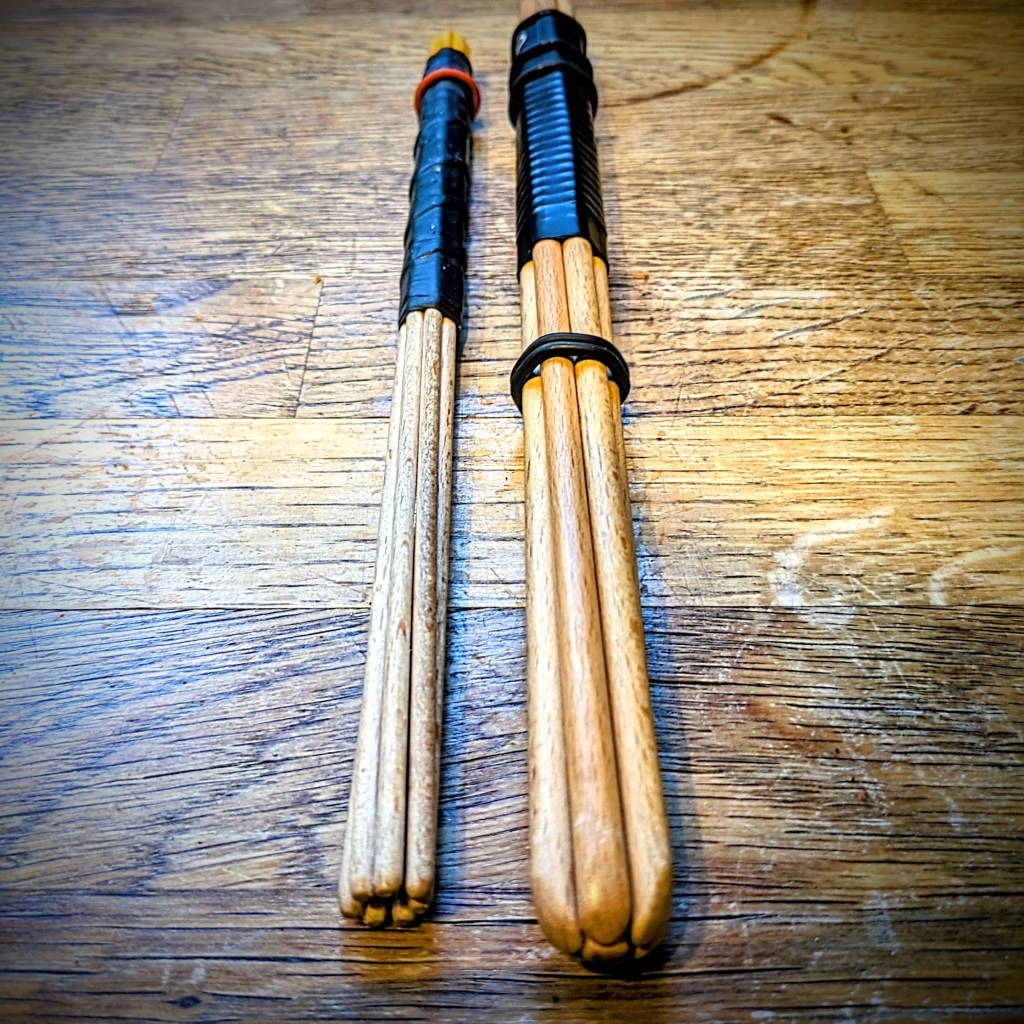
Hot rods are groups of thin dowelling, tied together to make a beater. Commonly they will be bamboo, birch or beech. Specifically the later two because they are hardwoods which are still flexible.
Hotrods are very popular. The ‘brushy’ sound they give is very pleasing whilst offering enough of a solid beater to still be able to play fairly loudly. It’s hard to miss these tippers because the internet is a wash with them. I think this might be because hot rods are super easy to make; so a lot of people try to flog them.
Tip: make sure you’re using hot rods which are still long enough. A tipper should be around 24 cm minimum. Tippers which are shorter will have less swing – less volume and will make it harder to do triplets (in top-end style).
Clicker Tippers
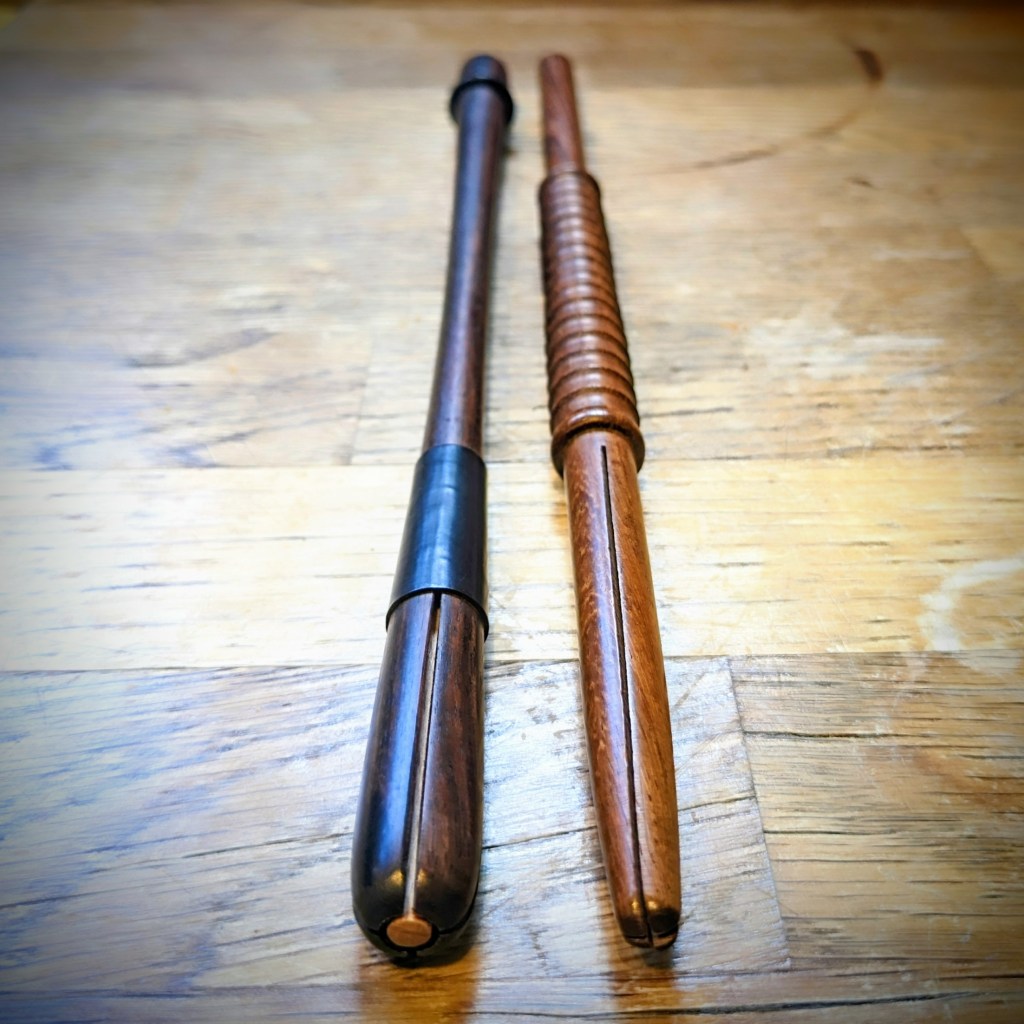
Clickers are wooden tippers with one (or both) ends split into sections. The point being that when the drum is struck, the segments bang together making a clicking sound.
The click adds an additional layer of higher frequencies to the bodhran sound which is otherwise missed with a solid tipper. You sacrifice some ‘punch’ and volume of course, but the ‘click’ adds such a complimentary part to the timbre which most find very pleasing.
Brushes
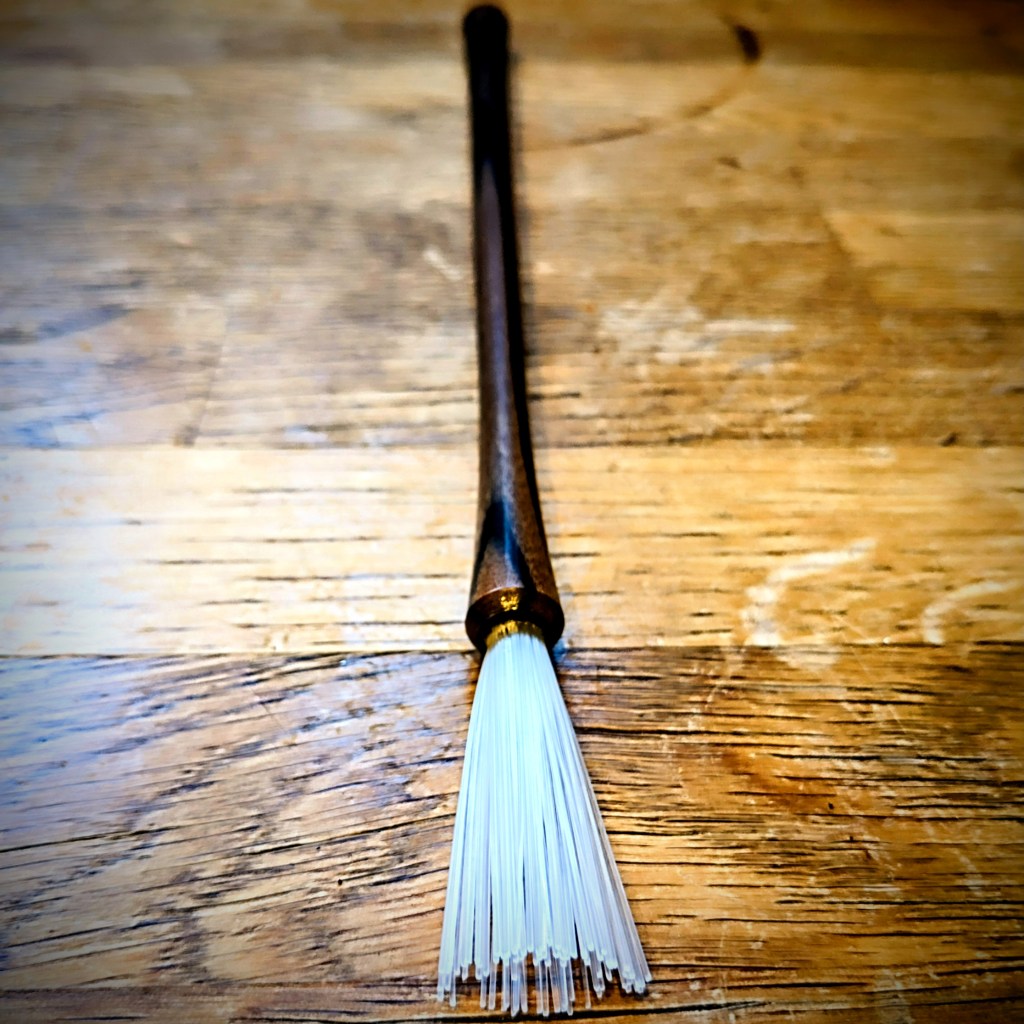
All the brushes I have seen, or own, are solid wood tippers with a small brush on the bottom, or on both ends. Certainly any brushes that I’ve played with all have a very low volume and comparatively long attack. This is because the brushes hold the wooden end of the tipper away from the skin. Don’t take that as a criticism though! They sound amazing. Imagine jazz brushes on a snare drum, but on a bodhran!
Because they are so quiet though, they have a lot less uses. Also, they are a lot harder to play faster, or with more complicated sticking styles. But really though – they sound lovely!
The pit-falls of the newer tipper types
I’m all for a diverse choice of tippers – honestly I am. But in my experience of playing the bodhran and experimenting with tippers I’ve found that the newer ones, which add the brush or click sounds, can be a bit dangerous.
The rods add additional frequencies in the ‘exciting’ high frequency ranges, which our ears find morish. Just like sugar and salt are to our tongue. They sound really great but you can become normalised to them, if you use them exclusively. This then means that if you try to play with a solid wood tipper at any point, it may begin to sound dull and boring.
You might also agree with me that brushes and clickers, which have a little more bounce, can be slightly easier to learn some techniques with.
You might think that the sound and ease of learning are reasons to adopt the hot rod, but solid tippers offer their own set of benefits which you don’t want to lose.
Because they are solid – they are faster. The impact on the skin doesn’t bounce or bend the tipper as much. This means you can play faster, with less expenditure of energy.
Also because they are solid. You can hit the drum harder and louder. This is really important when you’re playing in a loud session, for long periods of time. In these situations the higher frequencies are lost to the wall of sound anyway, but now you need less energy to continue keeping up with overall volume.
Certainly in loud sessions – hotrods are weaker.
To a degree – these higher frequencies are lost when miced up and playing live too. So you want to keep up your playing with all types of sticks to maintain your live repertoire too!
I strongly suggest that you keep a range of sticks but don’t allow your ears, or your hands to get used to any one in particular. Do not accept a limitation on your repertoire, or your volume, for the sugary sound of one particular tipper!
Take the time to practice and learn everything with all tippers.
Tipper cases
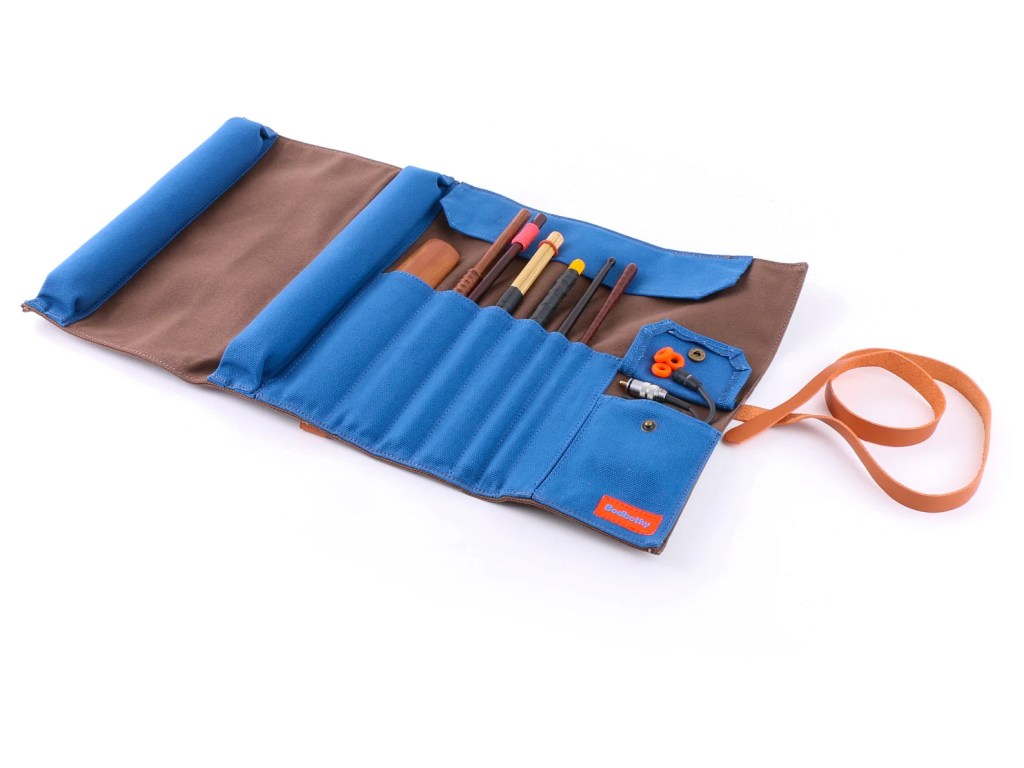
There really aren’t many really good bodhran tipper cases available. It’s understandable because it’s a niche market. There is the Bodbothy bodhran tipper case which seems quality from the reviews, and doubles up as a stand, which seems perfect for gigs and sessions. The Hedwitschak site sells cases too, but they seem little more than pencil cases TBH.
Tipper grips
I spent a good few years obsessing about grips for my tippers. When I first started to learn faster top end playing the stick used to slip quite a lot. They still do a little even now but you learn how to play without them slipping over time. In the meantime though it can be a problem!
The best grips create a ‘stopper’ which means you can still hold the tipper itself directly whilst still stopping the stick from slipping. Wrapping a rubber band round actually does a pretty good job – but don’t let the elastic band get old, otherwise it’ll degrade and get sticky. http://Grips for bodhran tippers
The absolute best rubber bands to use are castration rings. This is a fairly well known trick by now but such good advice. These are very thick red or green bands with a very small diameter. They are for castrating lambs but maybe try to keep that from your mind! They fit over any tipper and hold in place perfectly without adding any unwanted weight!

You can buy them from hundreds of places online – just Google them!
What’s the best tipper for beginners?
The best tippers for beginners are solid wood tippers and hot rods. Get yourself one of each. Don’t pick anything flashy – just get a simple wood tipper – as straight and as long as you can find.
For the hot rods – just make your own. They are pretty easy and quite fun to make. That way you can experiment with size and weight until you find something just right for you. If not – just check etsy for some great, in-expensive ones.
Always the most important advice though is to make sure you practice with both though. And anything new you learn – learn on both. Set aside time to practice with both and don’t neglect one no matter what your ears prefer.
 Bodhran Player